Sample page: illustrative voices, not real interviews.
Sample story · Public Art
Childe Hassam Park
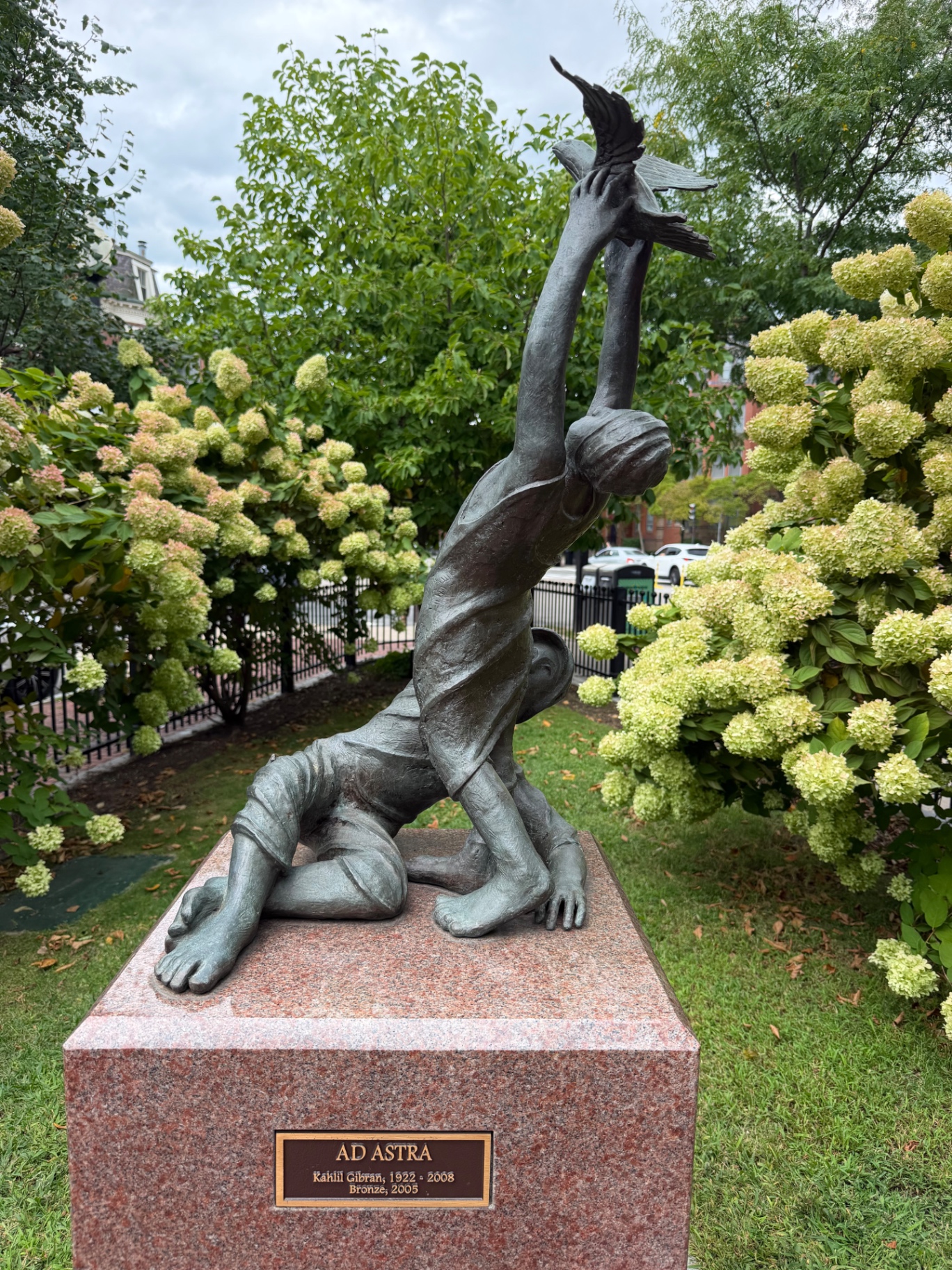
A bronze sculpture beside a plaque reading Ad Astra — to the stars. What does a public artwork remember, and what do the people who pass it every day want to say?
Learn
Why this matters
Childe Hassam Park is a small green space in Boston's South End, named for the American Impressionist painter who lived and painted in the neighborhood. At its center stands a bronze sculpture beside a plaque reading Ad Astra — to the stars.
Public art is usually seen in passing: on the way to work, while walking a dog, between errands. A Let It Speak page gives that sculpture a voice — not one voice, but many: the artist's intent, a neighbor's memory, a historian's context, a visitor's reflection. The artwork stays exactly where it is; the stories simply make it easier to stop and look.

Listen
Hear the people connected to it
A real Let It Speak page here would feature people connected to the artwork, park historians, nearby residents, arts educators, and visitors who have their own reasons for pausing at the sculpture.
Maya Brooks
Neighborhood resident
“I meet my mother here every Saturday”
Sample voice. In a live installation, you'd hear Maya here.
David Okafor
Public art historian
“What the sculpture has meant to the South End”
Sample voice. In a live installation, you'd hear David here.
Elena Voss
Arts educator
“What students ask when they see it”
Sample voice. In a live installation, you'd hear Elena here.
Kenji Watanabe
Parks steward
“How the park changed once the sculpture arrived”
Sample voice. In a live installation, you'd hear Kenji here.
Sofia Reyes
Visitor
“It reminded me of my grandmother”
Sample voice. In a live installation, you'd hear Sofia here.
Amara Johnson
Local artist
“The difference between seeing art and listening to it”
Sample voice. In a live installation, you'd hear Amara here.
A real Let It Speak page would ideally feature 10 or more voices. The exact number depends on the partner organization and community.
Reflect
What does this mean to you?
“What public artwork in your own neighborhood makes you stop, even for a second?”
“If a sculpture in your city could speak, what question would you ask it?”
Ask
What would you like to know?
Submit a question about the artwork for a public art historian, the parks department, or the community.
- Ask about the artwork
- Ask a Historian
- Ask the Park
- Ask the Community
How visitors take part
- Ask a question of a historian, the place, or the community.
- Share a reflection in writing, audio or video.
- Every contribution is reviewed by the partner organization before it appears.
Continue the story
This page keeps growing. Return to hear new voices, read answered questions, and discover reflections from other visitors.
Teachers can use this page before a public art walk, bring students to the sculpture, and return afterward to share drawings, reflections and questions.