Sample page: illustrative voices, not real interviews.
Sample story
The Merci Train
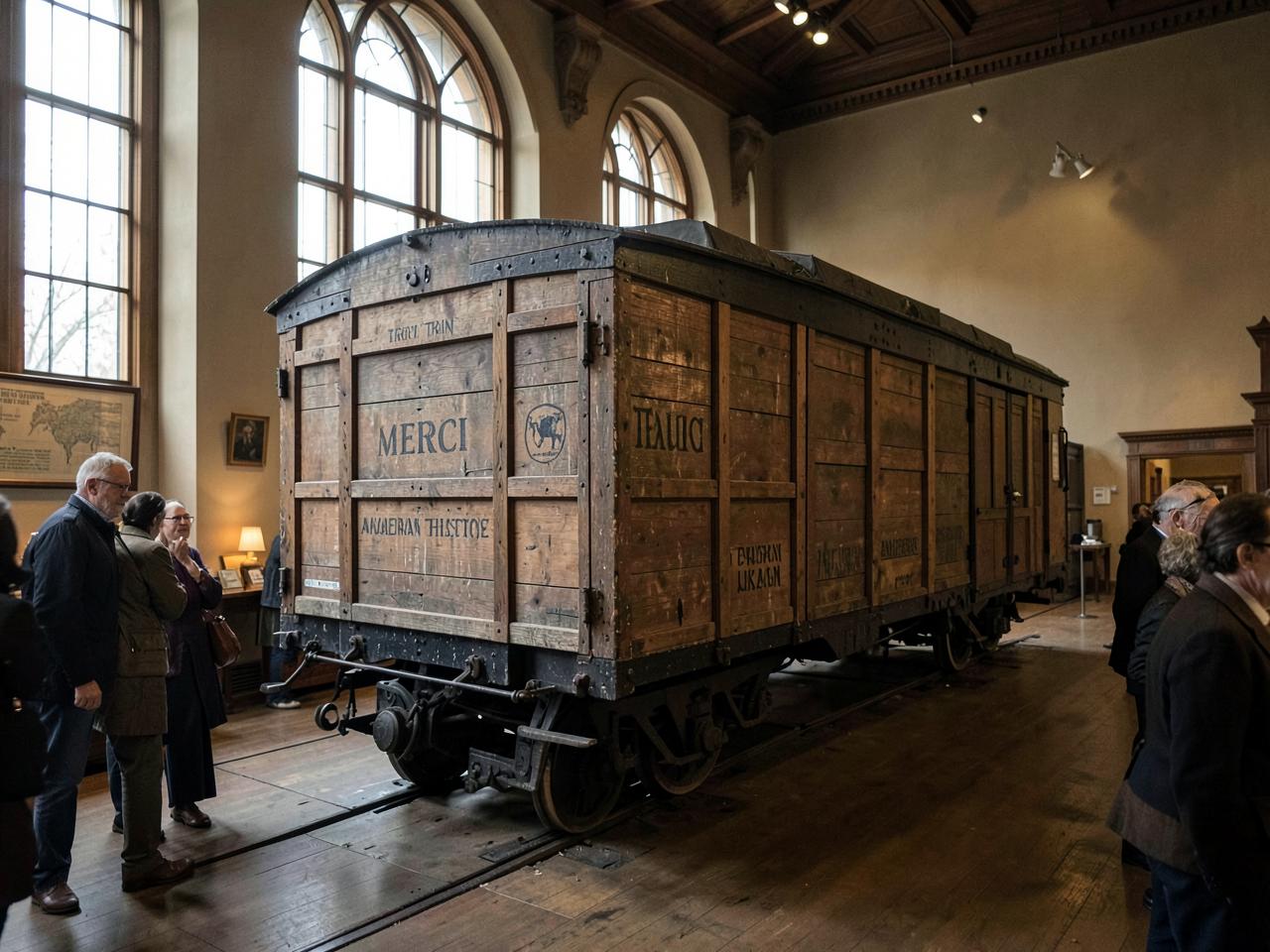
In 1949, forty-nine boxcars filled with gifts crossed the Atlantic from France to America as a thank-you for liberation. This one still speaks.
Learn
Why this matters
The Merci Train was France's response to the American Friendship Train, a grassroots effort that sent food and supplies to Europe in 1947. In return, French citizens filled each of forty-nine boxcars—one for every state, plus one shared by Washington D.C. and the territories—with gifts of art, furniture, keepsakes and handwritten notes.
Many boxcars have been lost, but a few survive in museums and communities across the United States. They are more than artifacts. They are invitations to remember a moment when ordinary people on both sides of the ocean tried to say thank you.

Listen
Hear the people connected to it
A real Let It Speak page here would feature museum staff, military historians, French-American community members, and families connected to the gifts inside the boxcar.
Robert Hall
Museum historian
“Why this boxcar survived when most did not”
Sample voice. In a live installation, you'd hear Robert here.

Margaret Chen
Military historian
“The Friendship Train that started the exchange”
Sample voice. In a live installation, you'd hear Margaret here.

Daniel Moreau
French-American community member
“What the gifts meant to families in France”
Sample voice. In a live installation, you'd hear Daniel here.
Priya Sharma
Descendant of a Merci Train gift recipient
“The small wedding portrait that crossed the ocean”
Sample voice. In a live installation, you'd hear Priya here.
A real Let It Speak page would ideally feature 10 or more voices. The exact number depends on the partner organization and community.
Reflect
What does this mean to you?
“What can this story teach us about gratitude between nations?”
“Have you ever received or given a gift that felt larger than the object itself?”
Ask
What would you like to know?
Submit a question for the museum historian, a military historian, or the community.
- Ask a Historian
- Ask the Museum
- Ask the Community
How visitors take part
- Ask a question of a historian, the place, or the community.
- Share a reflection in writing, audio or video.
- Every contribution is reviewed by the partner organization before it appears.
Continue the story
This page keeps growing. Return to hear new voices, read answered questions, and discover reflections from other visitors.
Teachers can use this page before a museum visit, bring students to the boxcar, and return afterward to share reflections and questions.